Operational failures kill more GT expansions than bad products. A kirana owner who ordered from you, received short delivery or damaged goods, and waited 2 weeks for resolution will not order again — and will tell neighboring kiranas. This article is about what breaks first, and how to prevent it.
The Four Things Kiranas Judge Your Logistics On
1. Predictability of delivery time. A kirana owner plans inventory based on expected delivery dates. If they order on Monday expecting Wednesday delivery and it comes the following Monday, they either ran out of stock (losing a sale) or over-ordered to buffer (locking cash). Both outcomes create frustration. A predictable 4–5 day delivery is better than an average 3-day delivery with 3-day standard deviation. Predictability matters more than speed.
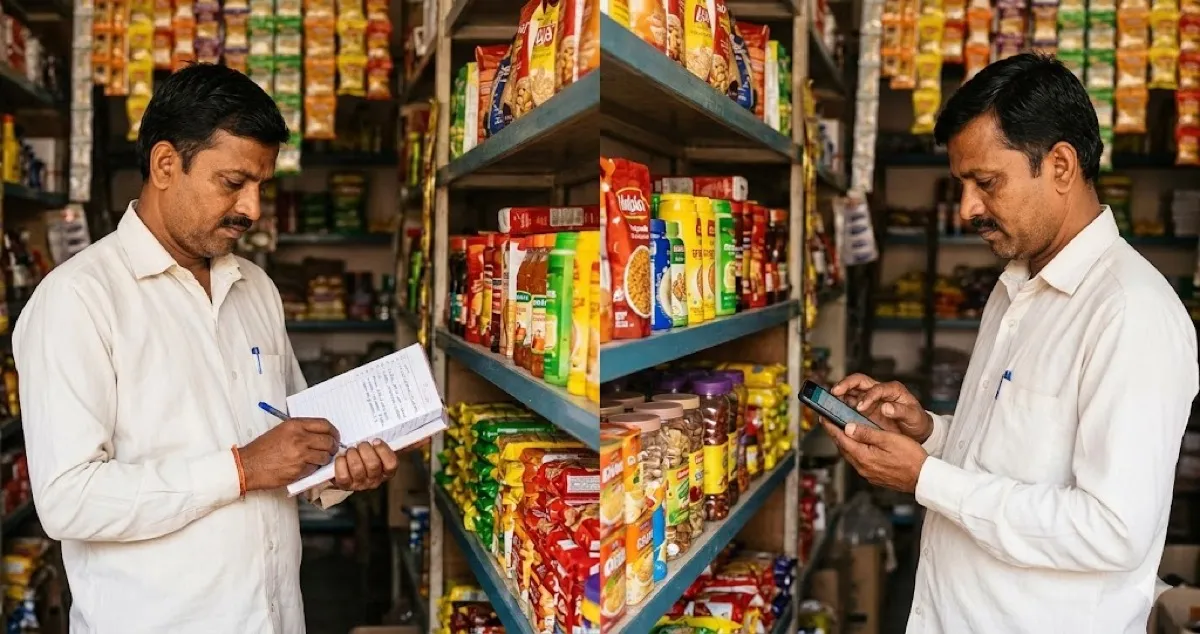
2. Accuracy of the order. Short shipments (missing items) and substitutions (sent SKU B instead of SKU A) create immediate disputes. A kirana owner reconciles every delivery against their order. A single error creates a 30-minute dispute resolution process and erodes trust.
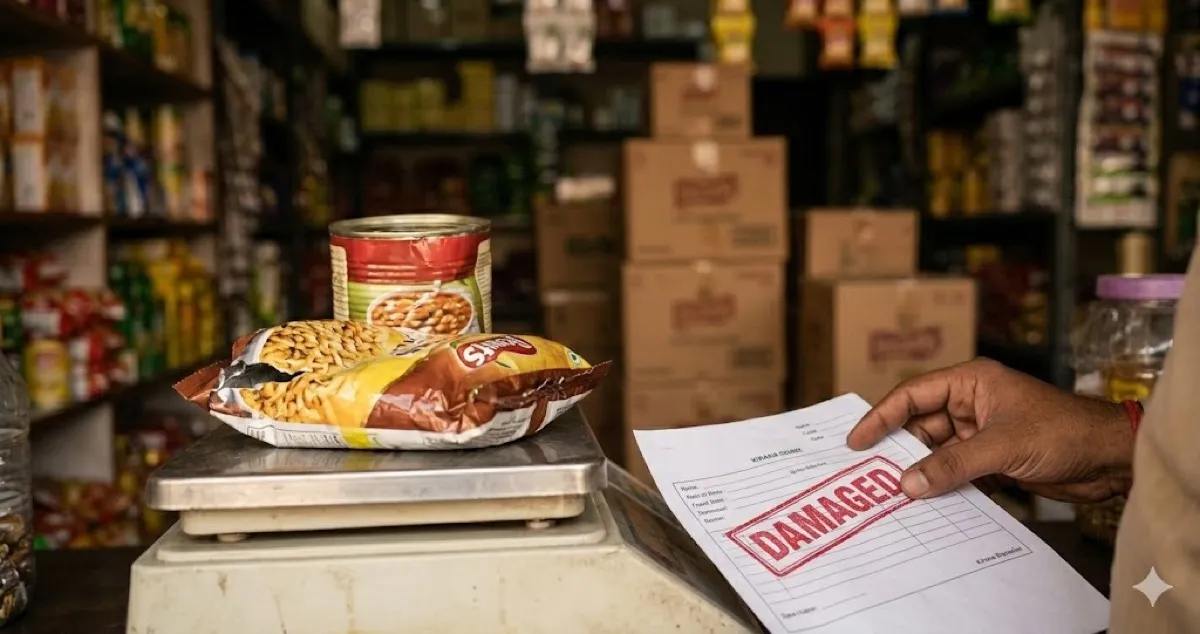
3. Physical condition on arrival. Leaking bottles, crushed boxes, broken seals — these are not just product losses. They are a visible signal to the retailer that your brand doesn't care about quality. Products that arrive damaged cannot be put on the shelf; they are a dead loss.
4. Claims resolution speed. How quickly and easily can the retailer report a problem and get resolution? In traditional GT, this goes through the distributor, who handles it slowly. In D2R, it's direct — which means a 24–48 hour resolution standard is expected.
For more on how D2R changes the fulfillment equation, see our guide on how D2R is changing general trade in India.
Packaging for GT: The Most Underestimated Variable
Your brand's packaging that looks beautiful in your home market may be completely wrong for the logistical reality of GT distribution.
Common packaging failures in GT expansion:
Master carton too heavy: A master carton above 15–18 kg creates handling issues at every touchpoint — factory picking, loading, transport, unloading at distributor, retail delivery. Heavier cartons mean more drops, more breakage.
Pack size not matching GT ordering patterns: GT retailers order in units appropriate for 2–4 weeks of consumption. If your minimum purchaseable unit is a 24-pack carton and a kirana only moves 3–4 units a week, they're tying up 6 weeks of cash. Break-open cartons or mid-tier inner packaging (6-pack or 12-pack inner) reduce this barrier.
Fragile packaging for a rough supply chain: GT logistics in Tier 2–3 cities is not gentle. Products that assume careful handling will have damage rates of 5–10%+. Products engineered for rough handling (robust outer carton, tight inner packaging, no glass where plastic is feasible) see damage rates of 1–2%.
Leakage-prone seals: For liquid products especially, the seal integrity under temperature variation and pressure (transit, stacking) must be tested for real-world logistics conditions, not just laboratory conditions.
Building a Reliable Last-Mile to Kiranas
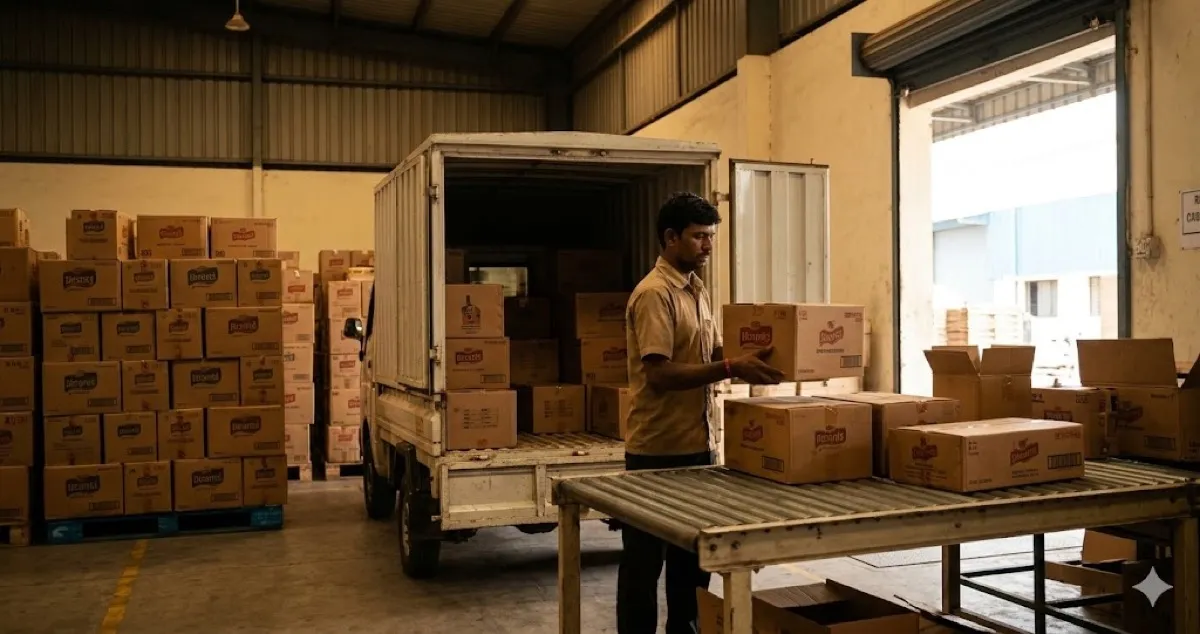
In GT, the last mile is the most expensive and unreliable part of the chain. Here's how to manage it:
In-home state with established lanes: Use your existing 3PL or distributor delivery infrastructure. You've already optimized this over years.
In new states, first priority: Audit 3PL options before committing to a market entry. Can you actually deliver to the cities you're targeting in 3–5 days? What's the 3PL's coverage in that state's Tier 2 cities? What are their damage rates on FMCG goods?
Do not assume national 3PLs cover everywhere. Large national 3PLs have patchy Tier 3 coverage. In many markets, regional 3PLs are more reliable for last-mile. The best way to evaluate is to send 10 test shipments before launching a market, not after.
Define SLAs in writing with your 3PL. “Delivery within 5 business days” is not an SLA. “Delivery within 5 business days for pincode list [X], with a damage rate SLA of <1.5%, claim resolution within 48 hours” is an SLA.
Sell directly to 40L+ kiranas — no GT network needed. Launch on Kirana Club's D2R Marketplace.
Explore the Marketplace →Returns and Reverse Logistics in New States
Returns are operationally complex in GT because:
- Physical return of goods is expensive (freight to bring goods back)
- Condition assessment on return is time-consuming
- Fraudulent claims are common (retailers claiming damage for goods they sold or consumed)
Practical approach for new state entry:
- Set a maximum return percentage per order cycle (e.g., 5% of order value)
- Accept photographic evidence of damage as proof — don't require physical return of low-value items (the freight cost often exceeds the product value)
- Issue credit notes for validated claims, applied to the next order (this incentivizes ongoing relationship and reduces cash outflows)
- Track claims by retailer. A retailer with a consistently high claims rate is either experiencing genuine service problems or gaming the system. Investigate both possibilities.
For the complete framework on FMCG distribution in India, read our comprehensive distribution guide. For a deeper dive into returns policy design, see how FMCG brands handle returns, expiry, and damages in GT.