Here's the exercise most founders skip: before committing to a new state expansion, build the actual P&L for year one. Not a rough “distributor margin + one sales hire.” The full picture. This article runs through every cost bucket.
Cost Bucket 1: The Sales Team
A minimum viable team for a new state typically looks like:
| Role | Monthly Cost (CTC + Travel) |
|---|---|
| State Head / ASM | ₹80,000–₹1,50,000 |
| Area Sales Executive x2 | ₹30,000–₹50,000 each |
| TSI/SR x4–6 | ₹18,000–₹28,000 each |
For a mid-tier state, you're looking at ₹3–6 Lakhs per month in direct team costs before the first invoice is raised.
Add: incentives (typically 10–20% of fixed for field staff), travel and accommodation for the ASM, mobile and data, market visits by your HQ team. Total team cost for year one: ₹40–70 Lakhs, varying significantly by state size and team structure.
Cost Bucket 2: Distributor and Retailer Margin
If you're doing ₹1 Cr/month of primary sales (goods from you to distributor) in a new state:
- Distributor margin at 6%: ₹6 Lakhs/month
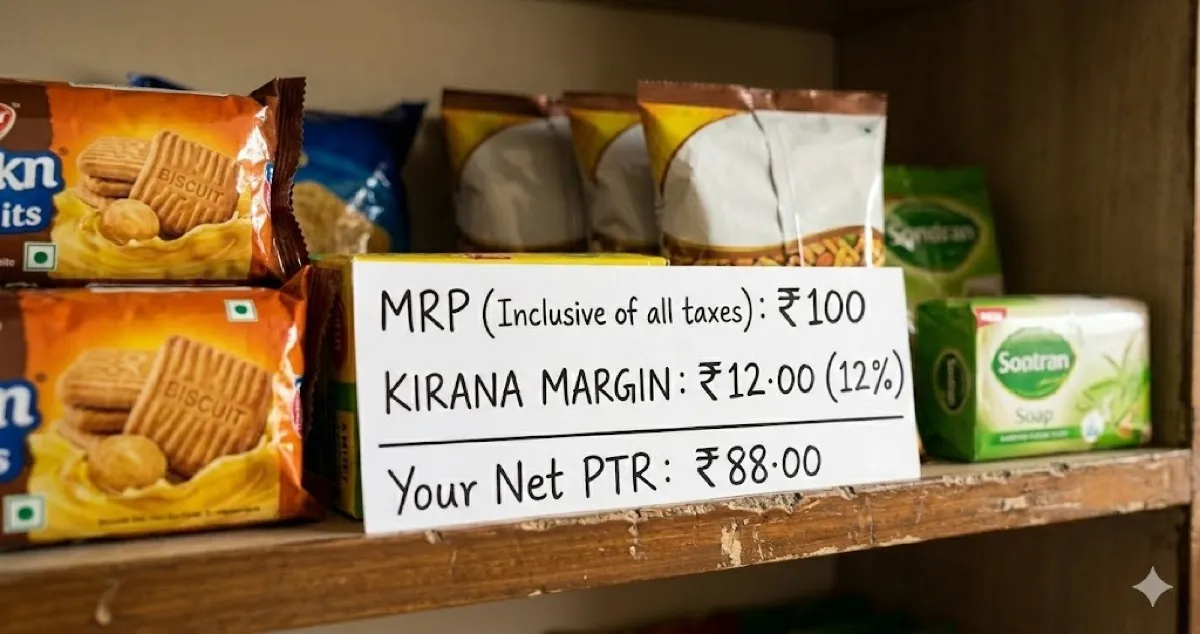
- Retailer margin factored into PTR, effectively 15–20% of MRP: built into pricing
This is the cost founders usually count. It's real, but it's not the whole story.
Read more about how margins work across the chain in our guide on FMCG distributor and kirana margins.
Cost Bucket 3: Schemes and Trade Marketing
To get shelf space and trial in a new market, you'll need to fund schemes. These can include:
- Free goods with purchase (10+1, 6+1, etc.)
- Cash discounts on case purchases
- Retailer activation incentives
- Display/counter top allowances
- Introductory offers for first 90 days
Budget: 8–15% of primary sales in the first 6 months of a new state entry. On ₹1 Cr/month primary, that's ₹8–15 Lakhs per month in scheme spend — much of which is not recoverable if secondary doesn't happen.
For a deeper look at demand creation tactics, see our article on FMCG demand creation in general trade.
Sell directly to 40L+ kiranas — no GT network needed. Launch on Kirana Club's D2R Marketplace.
Explore the Marketplace →Cost Bucket 4: Working Capital Float
This is the most underestimated cost because it's not on the P&L — it's on the balance sheet.
When you sell on 30-day credit to a distributor, you are financing 30 days of that distributor's working capital. In a new state with uncertain secondary, this often stretches to 45–60 days before you've built a payment rhythm.
Simple math:
- Primary sales target: ₹1 Cr/month per state
- Credit extended: 45 days
- Working capital locked: ₹1.5 Cr per state
Enter 5 states simultaneously and you've locked ₹7–8 Cr in working capital — before adding schemes float, team costs, or logistics.
At a cost of capital of 12–15% per year, that's ₹90L–₹1.2 Cr per year in finance cost that never shows up explicitly in your “cost of distribution.”
Learn how to manage this risk in our guide on GT credit risk and collections.
Cost Bucket 5: Returns, Expiry and Damages
New markets are hard on inventory. Products sit longer. Handling is rougher. Distributors are less careful with a new brand they're not sure about.
Typical return/damage rates in a new state:
- Damage in transit: 1–3%
- Expiry returns (slow-moving): 3–8% for new brands in first year
- Disputes (quality claims, wrong item): 1–2%
Combined, 5–10% of primary sales value can come back as claims or write-offs in year one.
We cover this in detail in our article on FMCG returns, expiry, and damages in GT.
Cost Bucket 6: Freight to New State
Your home state freight cost is built into your existing pricing. New states often mean significantly longer lanes.
Incremental freight for new states can add:
- Nearby states: 1–2% additional freight on sale price
- States 1,000+ km from factory: 3–5% additional
If you don't adjust your MRP or PTR for freight, this cost is silently killing your margin.
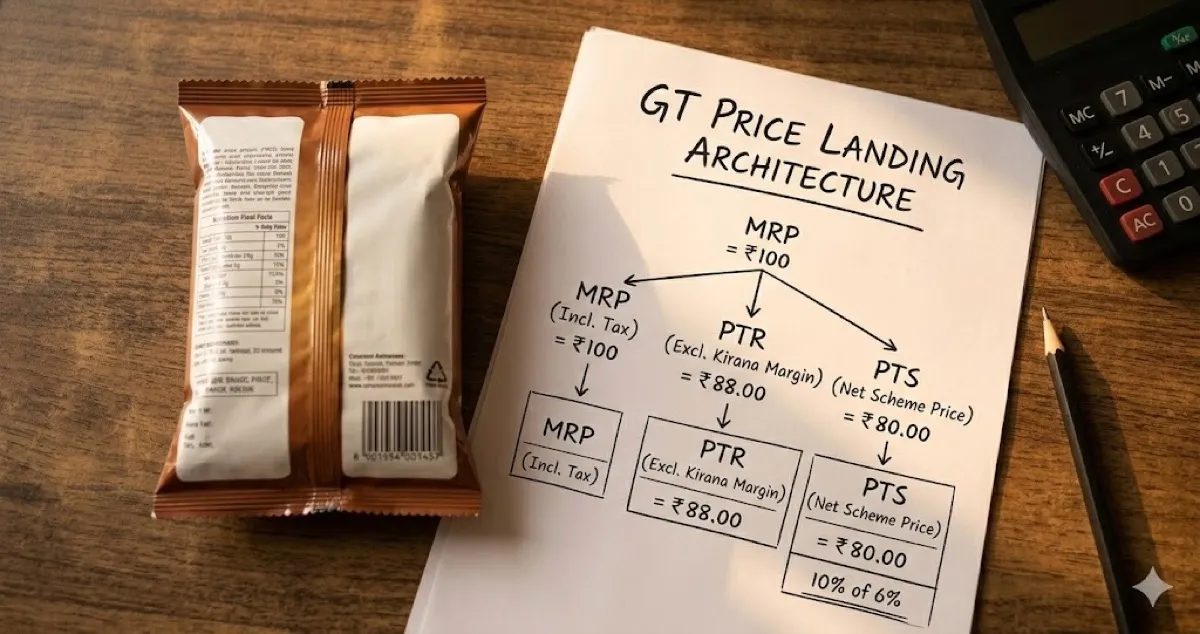
Understand how pricing architecture should account for this in our guide on GT pricing architecture: MRP, PTR, and PTS.
Sell directly to 40L+ kiranas — no GT network needed. Launch on Kirana Club's D2R Marketplace.
Explore the Marketplace →Putting It Together: Year One P&L for a New State
For a brand targeting ₹10 Cr of primary sales in year one (new state):
| Cost Item | Estimated Amount |
|---|---|
| Team (state head + 2 ASE + 5 TSI) | ₹50–60 Lakhs |
| Schemes and trade marketing (10% of primary) | ₹100 Lakhs |
| Returns and damages (6% of primary) | ₹60 Lakhs |
| Incremental freight (3% of primary) | ₹30 Lakhs |
| Working capital finance cost (₹2 Cr locked at 14%) | ₹28 Lakhs |
| Total Cost of Expansion | ₹270–280 Lakhs |
| Primary sales | ₹1,000 Lakhs |
| Effective cost of building this channel | ~27–28% of primary |
That's before your product manufacturing cost and your HQ overhead. The actual contribution from a new state in year one is frequently negative or barely breakeven — which is not wrong if you've built sustainable repeat, but is a disaster if secondary isn't converting.
What This Means for Your Decision
Year-one expansion math often looks unfavorable. That's expected. The bet is that year two looks very different once the channel is built and schemes reduce.
But the math tells you something important: the scale of commitment required means a failed state expansion is expensive. A distributor who underdelivers and 9 months of team cost doesn't come back. This is why the “test with lower commitment, build full structure when repeat is proven” approach is financially more rational for brands under ₹200 Cr.
For a complete overview of how distribution works in India, read our complete guide to FMCG distribution in India. And if you're looking for a lower-risk way to validate new markets before committing fully, explore our article on how to test a new FMCG market.