The traditional FMCG playbook says you need a field sales team to sell to kirana stores. Hire TSIs, assign beats, set daily call targets, manage attendance, run incentives. For national brands doing thousands of crores in revenue, this model is unavoidable. But for a regional brand doing ₹20–₹200 Cr, or a D2C brand making its first move into general trade, the cost of building a field sales team in a new state is often the reason the expansion never happens — or happens and fails within a year. This article explores the asset-light alternative: how to reach kirana retailers without a dedicated sales team, what works, what doesn't, and where the limits are. For the full context of how FMCG distribution works in India, start with our Complete Guide to FMCG Distribution in India.
What a Traditional GT Sales Team Does
Before replacing a sales team, you need to understand what it actually does. A traditional GT sales team performs six functions:
- Discovery: Identifying and mapping retail outlets in the territory — who stocks what, what categories are underserved, which outlets have the highest footfall.
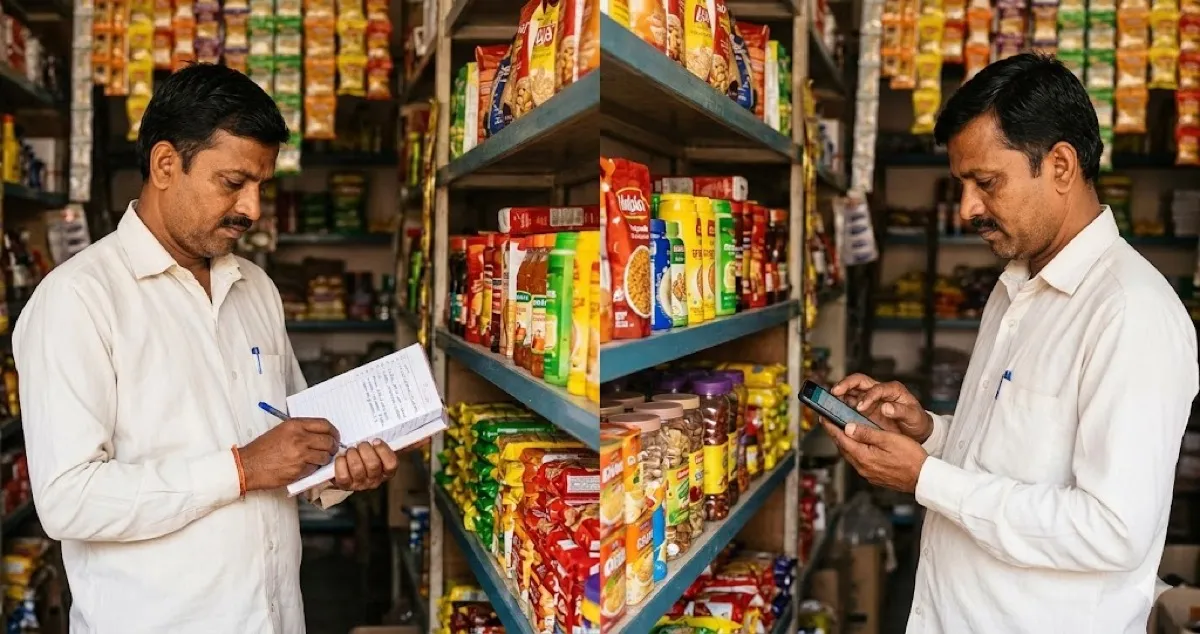
- Order booking: Visiting retailers on a scheduled beat, presenting the product portfolio, taking orders manually or via an app.
- Relationship building: Building trust with the retailer over time — handling complaints, ensuring timely delivery, communicating new schemes.
- Merchandising: Ensuring the product is visible on the shelf, positioned at eye level, and not hidden behind competitors.
- Scheme communication: Informing retailers about trade offers, introductory schemes, display incentives, and seasonal promotions.
- Market intelligence: Reporting on competitor activity, pricing changes, new product launches, and retailer sentiment.
An asset-light model doesn't eliminate these functions. It redistributes them across technology, community, and partner channels instead of a payroll-based salesforce.
The Asset-Light Model: How It Can Work
Here is how each of the six sales functions can be handled without a dedicated field team:
- Discovery through community platforms: Instead of sending salesmen to map territories, use platforms that already have access to kirana retailers. Platforms like Kirana Club connect brands to retailers across geographies — allowing you to identify interested retailers in a target market without physical scouting. This also surfaces demand signals: which categories are retailers asking for, what pack sizes move, what price points work.
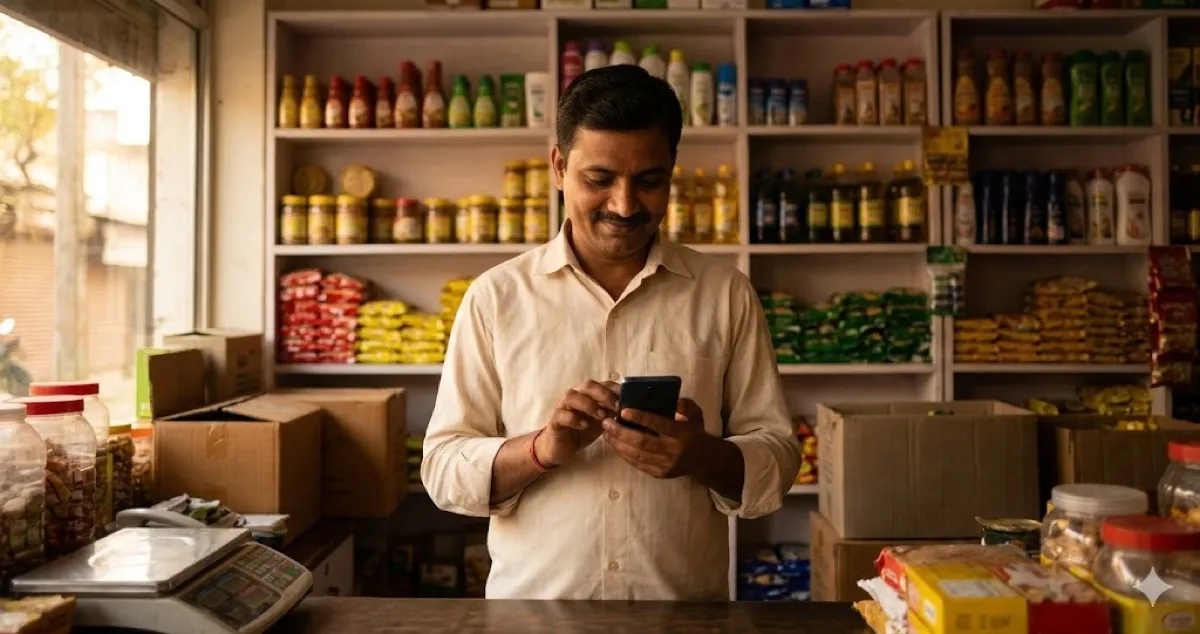
- Order booking through digital channels: A significant number of kirana retailers now place orders via WhatsApp, apps, or D2R (Direct-to-Retailer) platforms. For a brand entering a new state, enabling digital ordering means you can process orders from hundreds of retailers without a single salesman on the ground. The key is discoverability — the retailer needs to know your product exists and where to order it.
- Relationship building through peer trust: In traditional GT, the salesman is the relationship. In an asset-light model, peer influence fills this gap. When a retailer in Lucknow sees that a retailer in Kanpur is stocking and profiting from your product — through a community forum, a WhatsApp group, or a platform feed — that's more persuasive than a cold sales pitch. Community-driven demand creation is slower than a blitz sales push, but it's stickier.
- Merchandising through packaging and trade design: If you don't have a merchandiser visiting outlets, your packaging must do the selling. This means: clear branding visible from 3 feet away, counter display units (CDUs) that require no setup, and small-pack trial SKUs that can sit near the cash register. Design for the constraint.
- Scheme communication through digital touchpoints: Trade schemes can be communicated directly to retailers via platform notifications, WhatsApp broadcasts, or in-app banners — without relying on a salesman to explain the scheme at every outlet. The key is simplicity: if the scheme can't be understood in one line, it won't be adopted. Read more about effective approaches in GT Demand Creation Without Burning Money.
- Market intelligence through data platforms: Instead of relying on handwritten salesman reports, use secondary sales data from D2R platforms and retailer feedback from community channels. The data is more structured, less biased, and available in near real-time.
A Practical Entry Checklist for Asset-Light GT Entry
If you're considering entering a new state without a traditional sales team, here is a practical checklist:
Sell directly to 40L+ kiranas — no GT network needed. Launch on Kirana Club's D2R Marketplace.
Explore the Marketplace →When You Still Need Humans
The asset-light model has real limits. Here are the scenarios where you still need boots on the ground:
- Categories that need demonstration or explanation. If your product is genuinely new to the market (not just a new brand in an existing category), retailers need someone to explain what it is, who buys it, and how to sell it. Digital channels can't replicate this for unfamiliar products.
- Markets with very low digital adoption. In some rural and semi-urban geographies, kirana retailers don't use smartphones for ordering. The digital-first model assumes a minimum level of digital comfort. In markets where this doesn't exist, you need people.
- When you need to build deep, exclusive retail relationships. If your strategy depends on being the #1 brand in a specific category in a specific geography — with dedicated shelf space, exclusive visibility, and strong retailer loyalty — that requires human relationships. Digital tools can support it, but they can't replace the face-to-face trust that drives exclusive partnerships.
The asset-light model works best as a market entry and validation strategy. Use it to test demand, identify high-potential geographies, and build an initial retail base. Once you have proof of demand — retailers reordering, positive unit economics, growing outlet coverage — then invest in a field team to deepen and defend your position.
For the complete picture of FMCG distribution models in India, read our Complete Guide to FMCG Distribution in India.