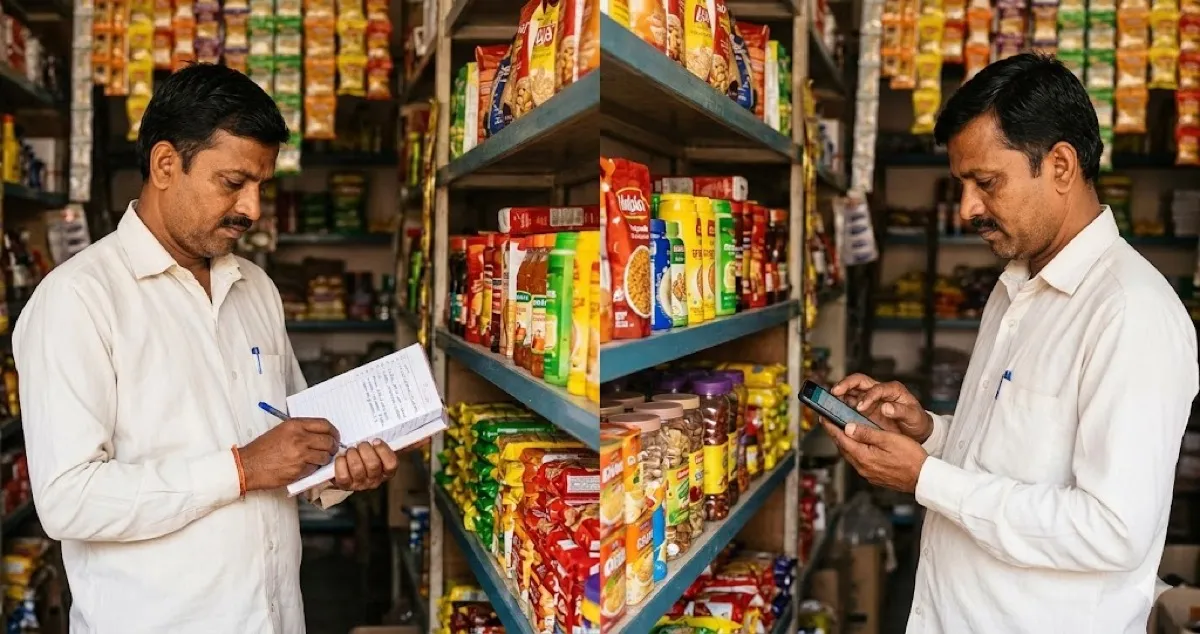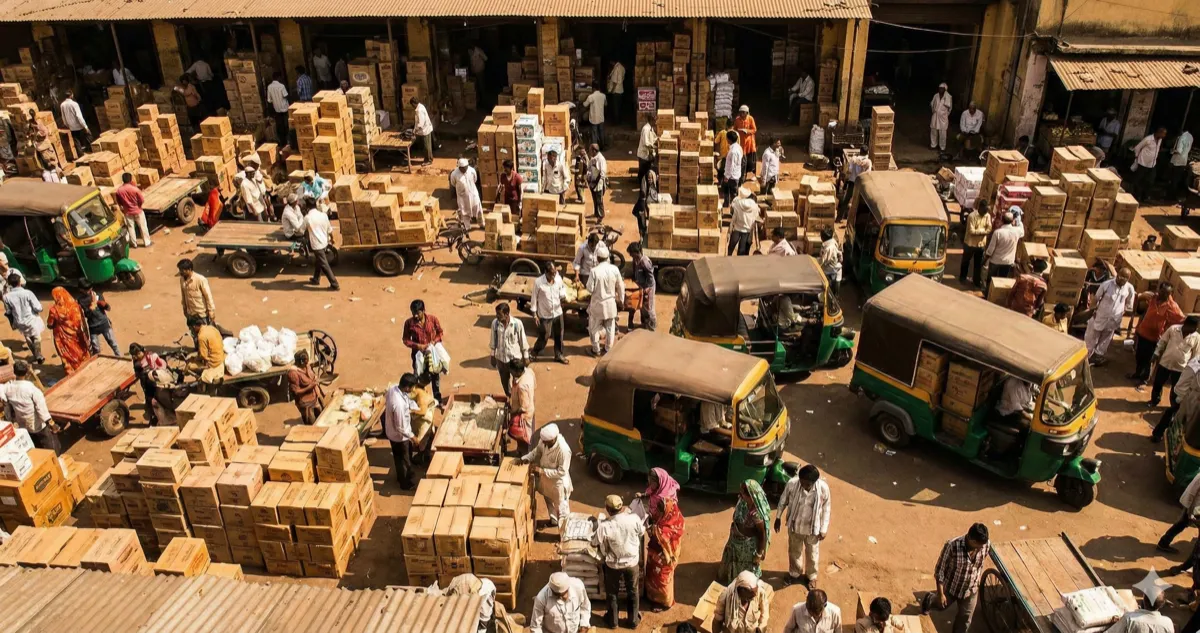
This isn't a theoretical question. Which model you choose determines how much capital you need, how fast you can enter, and how much control you retain.
Model 1: Super Stockist → Distributor → Retailer
What it is: The traditional three-tier model. You appoint a Super Stockist (SS) at the state level, who supplies to multiple distributors, who service retailers.
When it works
- Your category has very high velocity and wide geographic spread
- You want minimal direct distributor management
- You're entering a large, complex state (UP, Maharashtra, TN) with widely spread demand
Real advantages
- SS absorbs inventory risk and handles state-level logistics
- Distributor count is manageable (you manage fewer direct accounts)
- Works at scale with strong brand pull
Real disadvantages
- One more margin layer (SS typically takes 3–5% on top of distributor margin)
- You lose visibility below the SS level — secondary data is filtered through two layers
- If the SS relationship sours, you lose the entire state's supply chain
- Slower to respond to market feedback
Best for
Brands doing ₹200 Cr+ with proven pull, entering a large state where they want to move volume, not test.
Model 2: Brand → Distributor → Retailer (Standard GT)
What it is: You manage distributors directly, no SS layer. Distributors cover their city/district and service retailers on their beat.
When it works
- You want direct visibility into secondary
- Your volumes don't justify a full SS layer
- You're building distribution city by city
Real advantages
- Better visibility and control than the SS model
- Distributor accountability is direct
- Faster course correction
Real disadvantages
- You need to manage more relationships (in a large state, potentially 15–30 distributors)
- Still requires significant team to manage and support distributors
- Credit exposure is distributed across many parties
Best for
Regional brands at ₹50–200 Cr entering adjacent states with some category familiarity. The most common model for brands in this guide's target audience.
For a practical guide on finding the right distributors, read our article on how to find distributors in India.
Model 3: Direct-to-Retailer (D2R) via Platform
What it is: You reach kirana stores directly via a platform — no distributor layer, or a hybrid where distributors handle last-mile but ordering is centralized digitally.
When it works
- You want to enter a new market fast, before building full distribution infrastructure
- You want to test SKUs and cities with real secondary data before committing
- You want retailer-level visibility that traditional distribution doesn't give
Real advantages
- Fastest market entry timeline (weeks, not months)
- Direct retailer data (you see who orders, what, and how often)
- Lower upfront capital commitment
- Can test new geographies without a full team build
Real disadvantages
- Requires operational sharpness (your fulfillment, packaging, and service must be tight — there's no distributor to absorb friction)
- May not reach the full retail universe initially (platforms have their own retailer networks)
- Not a substitute for distribution in areas where you want deep lane penetration
Best for
Brands that want to validate new markets before committing to full distribution investment, or brands whose primary constraint is capital and speed rather than national brand awareness.
Learn more about this model in our detailed article on D2R (Direct-to-Retailer) in India's GT channel.
Sell directly to 40L+ kiranas — no GT network needed. Launch on Kirana Club's D2R Marketplace.
Explore the Marketplace →Decision Matrix
| Factor | SS → Distributor | Distributor-led GT | D2R Platform |
|---|---|---|---|
| Speed to first order | Slow (3–6 months) | Medium (1–3 months) | Fast (2–6 weeks) |
| Capital requirement (year 1) | High | Medium–High | Lower to start |
| Visibility into secondary | Low | Medium | High |
| Control over retailer experience | Low | Medium | High |
| Scales to full national coverage | Yes | Yes | Hybrid with GT |
| Works for new brand with low pull | No | Depends | Yes |
The honest answer for most brands in the ₹50–200 Cr range: start D2R in new states to prove the market, then layer in distributor infrastructure where repeat is proven. You don't have to choose one model permanently.
For a complete overview of all distribution models and how they fit together, read our complete guide to FMCG distribution in India.