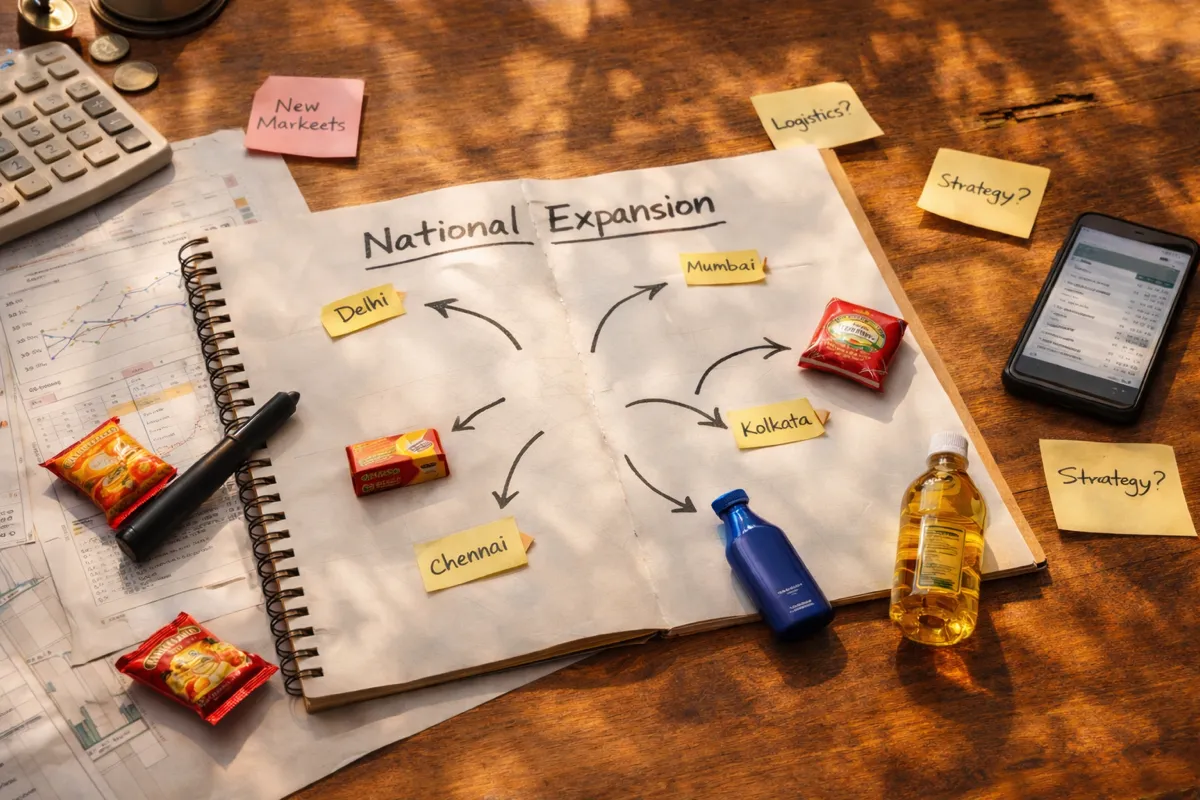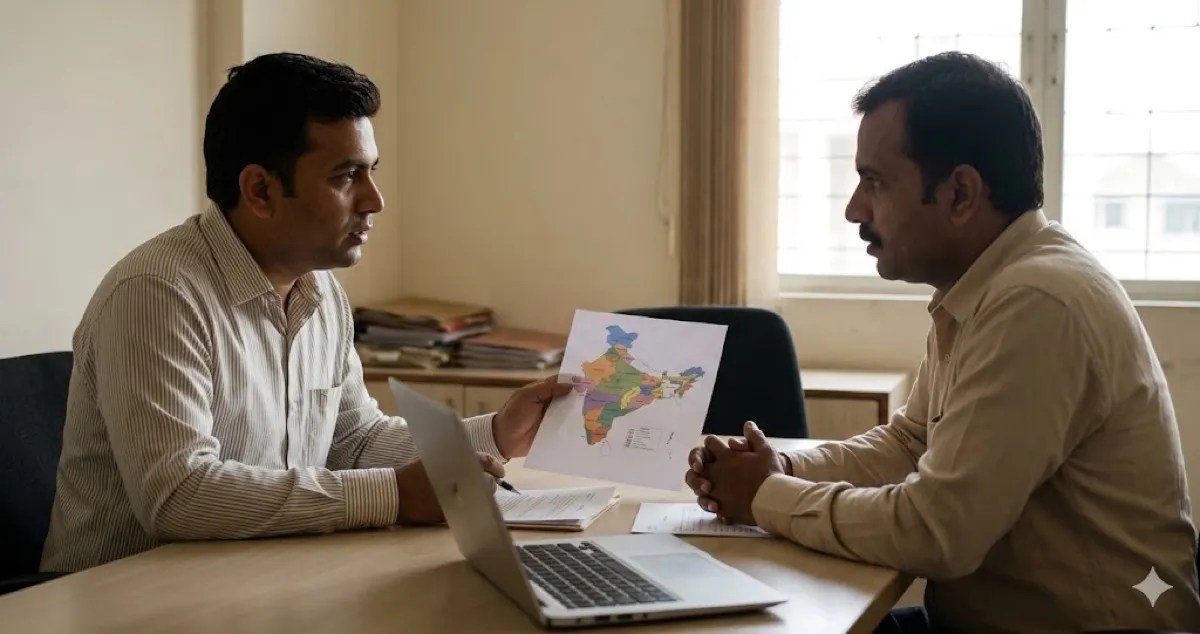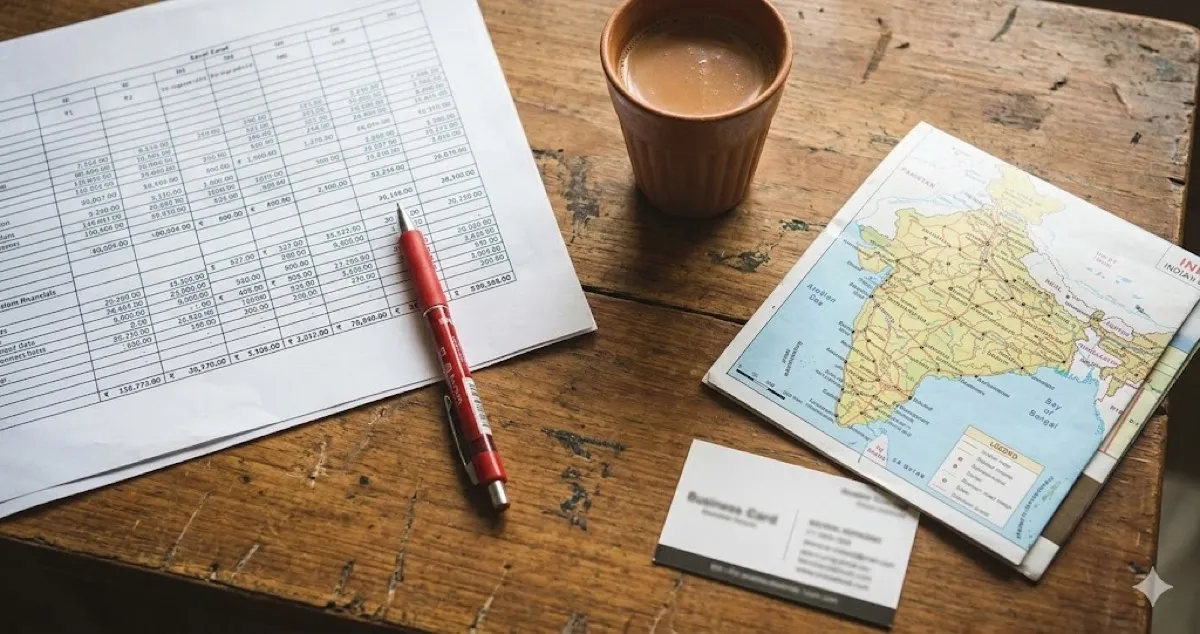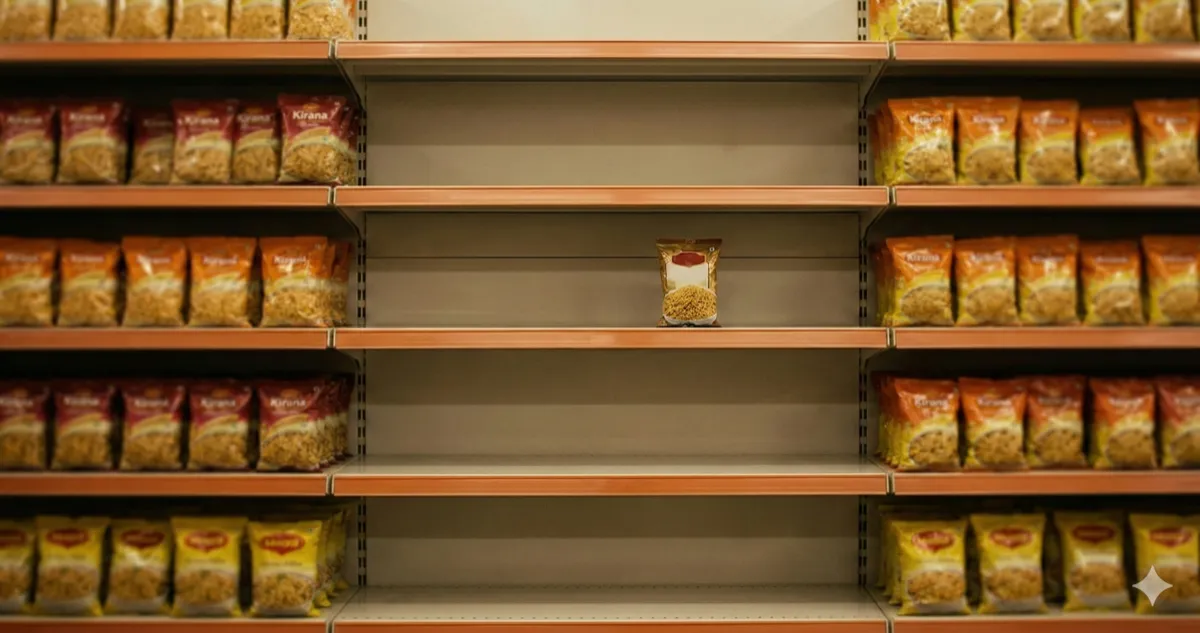
Most regional FMCG expansion stories follow the same arc: excitement at launch, flat secondary in month 3, team turnover in month 6, quiet exit by month 12. The product rarely fails. The expansion model does.
Failure Mode 1: The Wrong Distributor in the Wrong Network
This is the single most common reason for failure and the hardest to diagnose early.
A distributor's primary business is the brands they already represent — usually the bigger ones. When they add your brand to their portfolio, you are at the bottom of salesman attention, shelf pitch priority, and credit allocation.
The symptoms:
- Primary orders come regularly (they're buying from you)
- Secondary data is unavailable or doesn't match primary
- Outlet count grows slowly for the first few months, then flatlines
- Retailer feedback is “haven't heard of this” despite months of distribution
The root cause: Your distributor's salesmen have 150+ outlets to cover and 15+ brands to pitch. Your brand doesn't get pitched unless you've made it the most attractive thing in their bag.
Fix: Smaller, more focused distributors often outperform large ones for new brands. A distributor who handles 5 brands and covers 500 outlets reliably is more valuable than one who handles 25 brands and covers 2,000 outlets in theory.
We cover this in depth in our guide on how to find distributors in India.
Failure Mode 2: Pricing That Doesn't Survive the New State
A brand that's profitable in Rajasthan makes the mistake of copying the exact same PTR/PTS into West Bengal. They forget:
- Freight from Jaipur to Kolkata adds 3–4% to cost
- Bengal's trade expects a different margin structure
- Competition in Bengal may be entrenched regional brands, not the same players as Rajasthan
- Category consumption patterns may differ
Outcome: Retailer finds margin inadequate, distributor can't fund schemes without cutting his own margin, product doesn't move.
Understand the full pricing architecture in our article on GT pricing architecture: MRP, PTR, and PTS.
Failure Mode 3: No Real Consumer Pull
This is painful to admit, but it's common. A brand that sells because it has strong regional salesman relationships and institutional memory in its home market tries to replicate that in a new state — and discovers the product itself doesn't create repeat purchase.
In your home market, your salesman knows every retailer by name. Retailers push your product because of the relationship. In a new state, there's no relationship. The product has to earn its own repeat.
If your home-state success is 70% relationship-driven and 30% product-driven, a new state will reveal that truth quickly.
Sell directly to 40L+ kiranas — no GT network needed. Launch on Kirana Club's D2R Marketplace.
Explore the Marketplace →Failure Mode 4: SKU Sprawl Killing Working Capital
Entering with 35 SKUs instead of 8 seems ambitious. It's actually capital suicide.
Each additional SKU requires:
- Separate distributor inventory allocation
- Separate retailer shelf space pitch
- Separate scheme design
- More picking complexity
- More expiry and slow-moving risk
A brand that enters a new state with too many SKUs will find:
- Inventory unevenly distributed (fast SKUs out of stock, slow SKUs aging)
- Credit claims on expiry returns
- Distributor attention spread too thin to push any SKU well
- Retailer confusion about what to order
Rule of thumb: Your hero SKUs in the new state should be the 5–8 products with the highest repeat velocity in your home state. Not the most innovative. Not the most premium. The ones that replenish fastest.
Failure Mode 5: Operational Underperformance Killing First Impressions
GT is unforgiving of service failures in the first 90 days. A retailer who tries your brand and receives:
- Short deliveries (missing items)
- Damaged products
- Late replenishment after running out
…will mentally categorize your brand as “unreliable” and deprioritize reordering. That perception is very hard to reverse.
Many brands are operationally sharp in their home state (they've built it over years) but operationally weak in a new state where logistics lanes are new, 3PL relationships aren't established, and there's no ground team to catch service failures.
Read more about logistics execution in our article on GT logistics and fulfillment to kiranas.
Failure Mode 6: Planning for Year One Revenue but Not Year One Cash Flow
The classic over-optimism: “We'll do ₹3 Cr in Maharashtra this year.”
Maybe. But the year-one cash flow looks like:
- Months 1–3: Heavy investment (team, schemes, pilot orders)
- Months 4–6: Some secondary, but expiry/return claims coming in, team ramp still underway
- Months 7–9: If lucky, early repeat patterns visible
- Months 10–12: Possible approach to breakeven on the state
If the founder budgeted 3 Cr revenue but not ₹1–1.5 Cr of net cash investment in the first year, the expansion will get cut before it had a fair chance.
See the full cost breakdown in our article on the real cost of building GT distribution in a new state.
Sell directly to 40L+ kiranas — no GT network needed. Launch on Kirana Club's D2R Marketplace.
Explore the Marketplace →What Actually Works
The brands that succeed in expansion share three traits:
1. They enter slow, prove fast. Two cities, 8 SKUs, 90-day repeat target. They don't announce “national launch.” They validate before they build.
2. They treat the first state like an R&D experiment. What's the actual all-in cost of distribution? What's the real retailer margin needed? What's the secondary conversion rate? They answer these questions with data before scaling the model.
3. They fix the unit economics before adding volume. Scaling a broken unit economics model just burns more money faster. They get contribution-positive at the state level before entering state number three.
For a complete overview of how distribution works across India, read our complete guide to FMCG distribution in India. For a practical framework on market testing, see our article on how to test a new FMCG market.